
How we measure
Here's what we look at inside a home.
A damp bedroom, a cold wall or a room that always feels stuffy.
Rather than assume what's causing it, we measure the conditions and show you what the readings indicate.
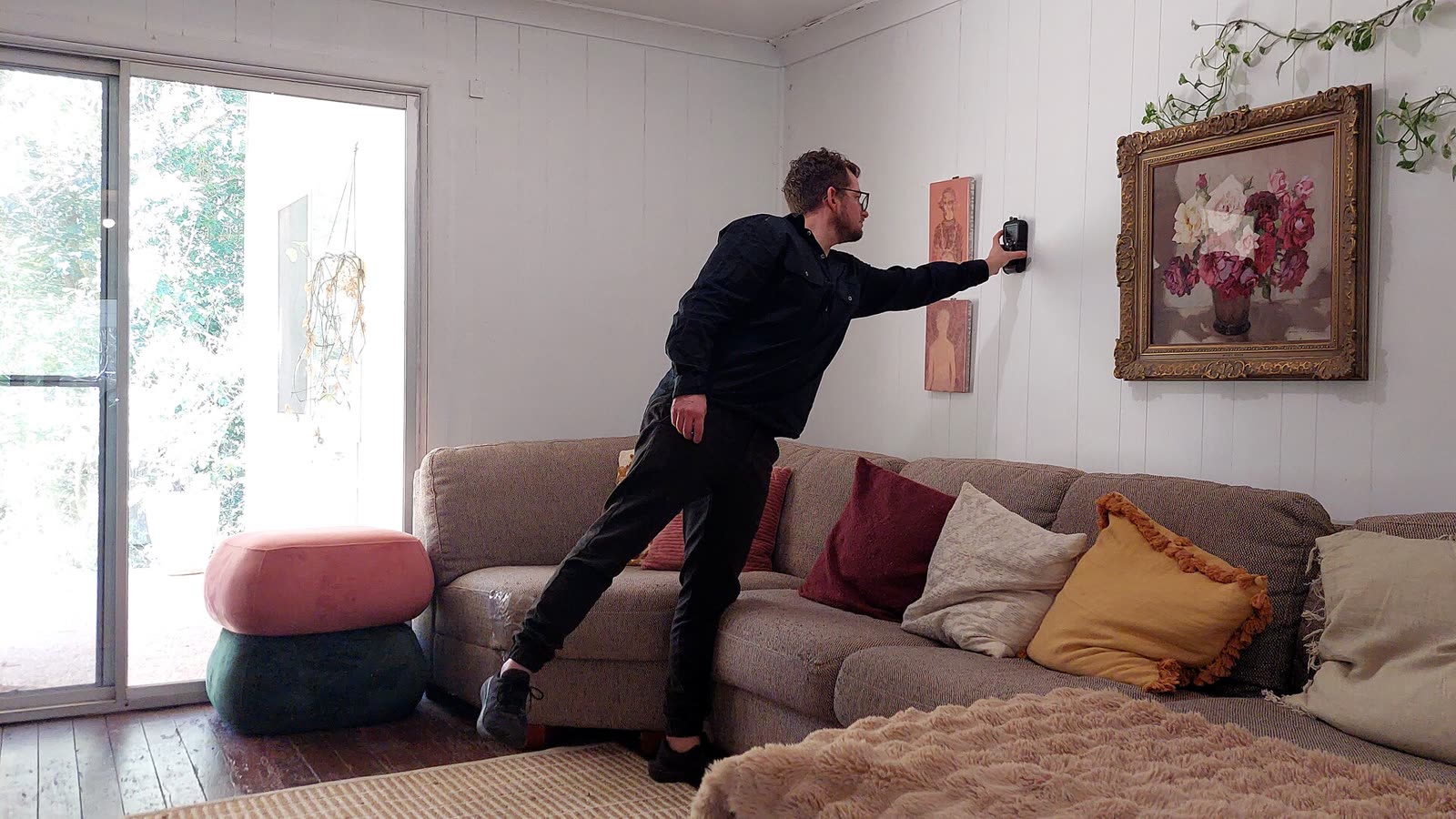
See a home being measured.
The house, one room, the readings on a wall, then where each one is kept.
Silent film, 38 seconds. A two-storey house among trees, then the camera moves inside to one room and faces its west wall. Five moisture readings appear at recorded positions on the wall. The same wall is shown as a thermal image, then the room air sensor shows temperature, humidity and CO2. One position opens to show where and when its reading was taken.
What's measured depends on the assessment you book.
Three things we measure.
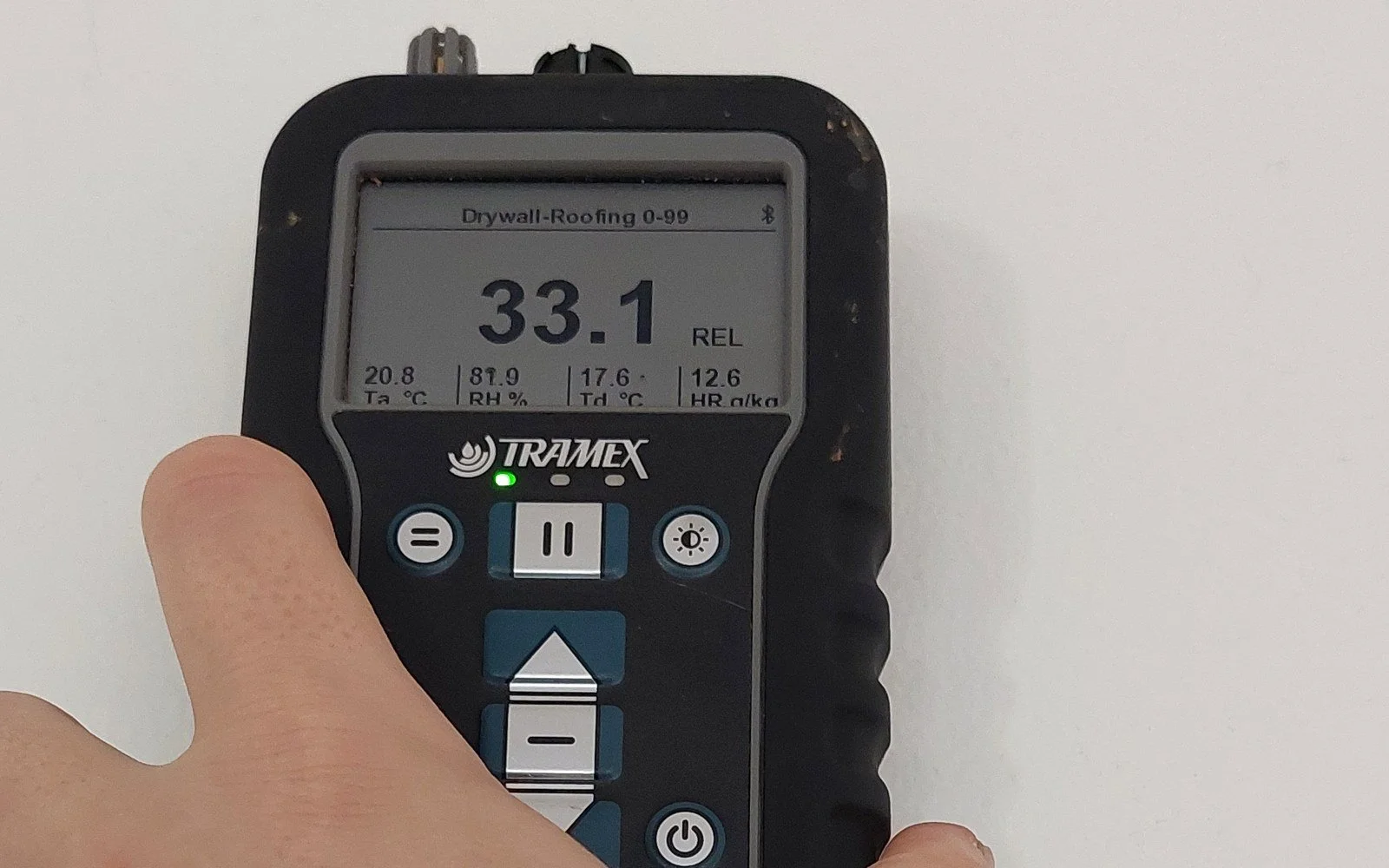
Moisture
We take readings at selected locations and record how they vary across the areas being assessed.

Surface temperatures
We record surface temperatures across walls, windows, ceilings and corners. Cooler spots can indicate where condensation is more likely in cooler months, and warmer spots show where heat is coming into the home in hotter weather.

Room conditions
Temperature, humidity and CO₂ readings help build a picture of the conditions inside the room.
It's the home you live in every day.
Damp rooms, condensation, musty smells and poor ventilation can affect how a home feels and how it's used.
NSW Health notes that people with asthma, allergies or other breathing conditions may be more sensitive to mould.
Depending on the assessment you book, we record moisture, surface temperatures, humidity and CO₂, and show you what the readings indicate and which areas deserve a closer look.
The next step might be monitoring, further investigation or a practical improvement.
Source: NSW Health, Mould
Measured. Recorded. Explained.

Measured
Readings taken at agreed positions in the room.

Recorded
Each reading kept with where and when it was taken.

Explained
What the readings indicate across the home, in plain words.
Each reading is connected to where it was taken, so you can see what was measured, understand what it indicates and decide what makes sense to do next.
Something in your home not quite right?
Tell us what you've noticed or what you're planning. We'll help you work out which assessment makes sense.
Or call now: 0485 835 959The detail behind the method.
For anyone who wants to check how the readings are taken and read.
The record and the interpretation are different things
The measured record says what was recorded and where.
Joe's builder-led interpretation says what he makes of the combined pattern.
The recommended next step says what is worth doing with that information.
Keeping those three parts separate makes it easier to question the evidence and prevents an interpretation from being presented as a measurement.
The order we work in
1. Agree what we will assess
We confirm the rooms, surfaces, tests and access included before the visit.
2. Check device readiness
We check the equipment and settings needed for the assessment and record which instruments are used.
3. Record the location and surface
Each point is tied to a room, wall, floor, ceiling, opening or other agreed location. The material, scale or mode and relevant depth setting are recorded where they affect the reading.
4. Establish relevant references
Where comparison is appropriate, a named reference point is recorded on a comparable material using the same device mode and settings. A reference reading is not automatically a dry control and it does not convert a comparative value into a moisture-content percentage.
5. Record the surrounding conditions
Recent weather, temperature, humidity, occupancy, openings and other relevant conditions are recorded so the reading is not separated from the day on which it was taken.
6. State what could not be reached
Inaccessible areas, unsuitable thermal conditions, conductive materials, metal, some membranes, wet surfaces and other instrument or access limits are recorded. A limitation is not filled with an assumption.
7. Interpret the combined record
Joe reads the pattern using his residential-building experience and explains what it indicates. Where the evidence does not establish a cause, the report does not claim one.
What the readings can tell you
Field instruments can record moisture indicators, temperature, humidity, thermal patterns and other agreed conditions within their stated modes and limits.
They do not see through every material, identify mould, determine health risk or independently establish why a reading is elevated.
Thermal imagery is interpreted only when the conditions support it. Moisture readings from different scales, modes, materials or depths are not treated as if they are directly comparable.
Structural observations and the builder's role
We can record visible and accessible building indicators, and Joe can explain what he makes of them from two decades in residential construction.
We do not carry out engineering calculations, design, certification or declarations that a structure is adequate or safe. When a question needs engineering analysis, the report names that next step.
What you receive
The client evidence pack holds what was agreed for the assessment booked, such as the report, mapped record, referenced photographs and walkthrough video. The report states the method, readings, context, interpretation, recommended next step and limitations.
Where Home State is included, the model, mapped evidence, report and walkthrough are kept together in one secure online record.
See what the Home Performance Baseline includes
Buying a home? The Pre-Purchase Home Performance Assessment applies the same method to the external walls and room air, with thermal imaging at selected locations, from $1,250 inc GST.