Renovating for energy efficiency? Six things to consider before the design is locked in
A renovation usually starts with what you want to change: the kitchen, the bathroom, the layout, the windows. It is also one of the best times to make the house more comfortable to live in, because walls, ceilings and floors may be opened anyway.
In this article
Insulation, while you have access
Ceilings, wall cavities and floors are hard to get at once the new linings go on. If the renovation is opening them anyway, this is the cheap moment.
Worth askingWhich rooms and surfaces are losing or gaining the most heat now?
Windows and glazing
"Better windows" is not one product. Orientation, shading, size, frame and glass all change how a room feels. If the windows are being replaced for looks or layout, check the spec suits the comfort you want too.
Worth askingWhich windows face the hardest sun, and which rooms feel it?
Shading and sun
A west-facing living room has a very different summer problem from a south-facing bedroom. Before adding big openings, decks or pergolas, look at how each room behaves through the day.

Ventilation and air leakage are two different jobs
A tighter house can be more comfortable and need less heating and cooling. It still needs fresh air, from windows, exhaust fans or a mechanical system doing a known job.
That is why Joe Builds records carbon dioxide, temperature and humidity alongside the building itself.
Worth askingIf we seal the house up, where does the fresh air come from?
Heating and cooling should not carry the whole house
Air conditioners work inside the building you give them. Insulation, glazing, shading and air leakage all change how hard they have to work.
Worth askingWhich rooms are hardest to keep comfortable, and why?
Record moisture before it is covered up
A renovation can close up surfaces for decades. Unusual moisture readings are worth recording first and, where indicated, investigating further. A reading on its own does not establish a cause, but it means nobody starts with a blank page.
Where the Baseline fits
Measure the house before the design is locked in.
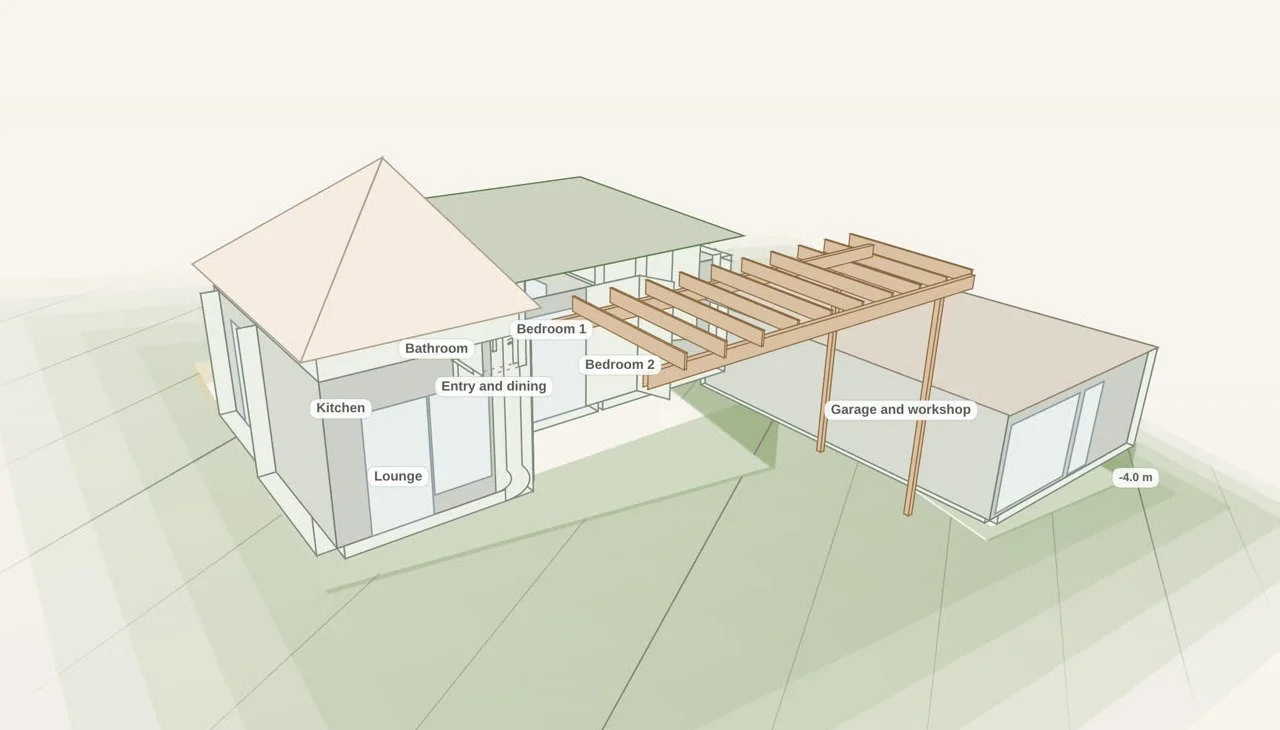
The Home Performance Baseline is one measured record of your house, room by room:
- Thermal imaging
- Mapped moisture readings
- Carbon dioxide, temperature, humidity
- Your Home State property record
- Joe's plain-words explanation and next steps
Your architect, builder or energy assessor starts from a measured record of the house. More on the energy-efficient renovation page.
Start with a Home Performance BaselineDecide which upgrades are worth it while the walls are still open.
Planning a renovation on the Coffs Coast? Start with a Home Performance Baseline.
Further reading: the Australian Government's YourHome guide to renovations and additions, and measuring before a renovation or repair.