
High-Performance Upgrade System
Measure the building before changing the building.
Most renovation problems begin before construction starts.
We identify how the home actually performs using measured building data before upgrade decisions, pricing, or renovation scope begins.
This prevents:
Hidden moisture risk
Poorly planned upgrades
Thermal imbalance
Unnecessary renovation cost
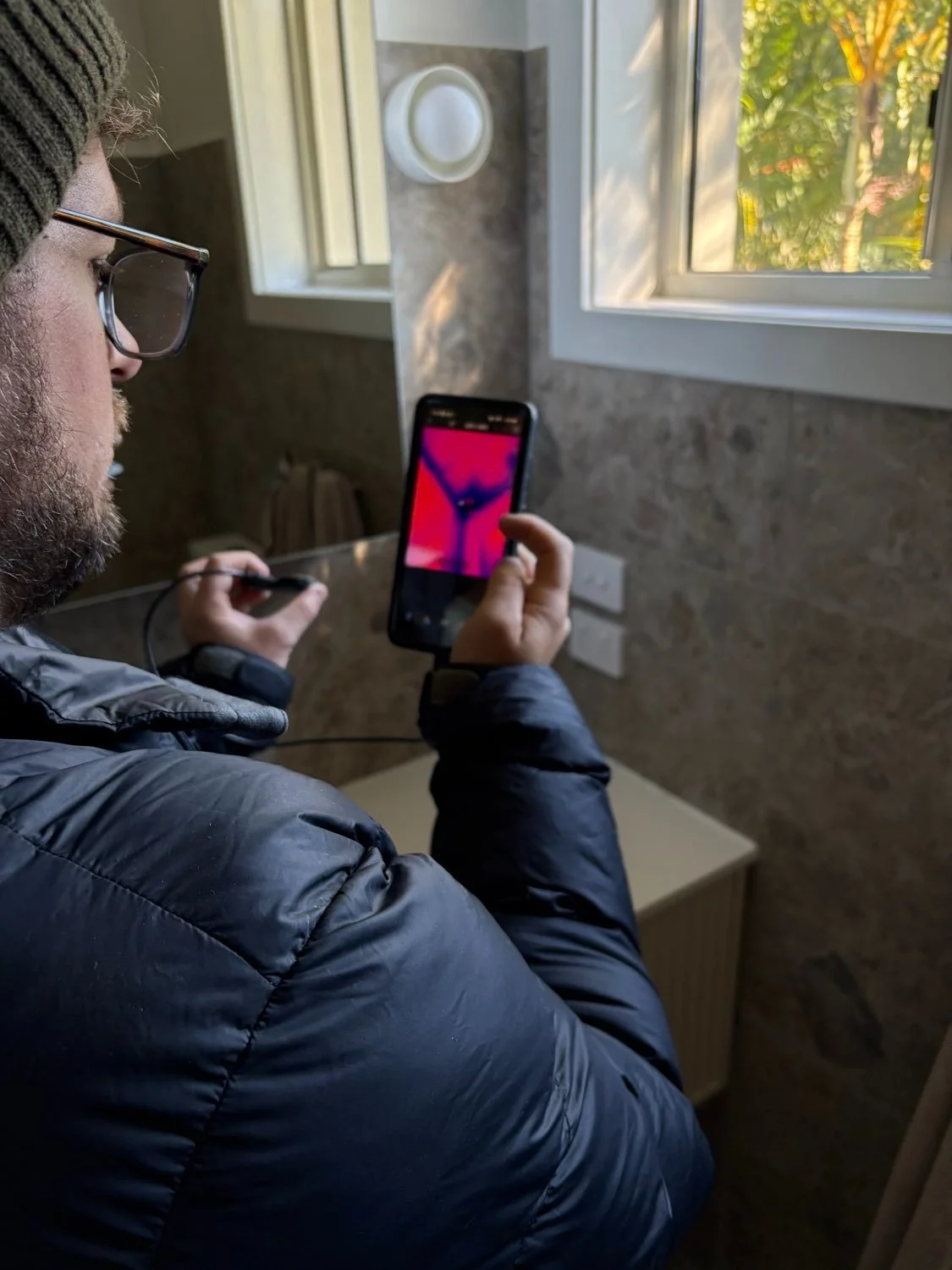
Hidden Environmental Conditions Beneath the Home
Most subfloor environments are never measured.
But elevated humidity, stagnant air, and poor ventilation below the home can directly affect:
indoor air quality
moisture stability
mould risk
floor durability
comfort inside the home
This home was operating with significantly elevated subfloor environmental conditions compared to both internal and external reference readings.

Subfloor Environmental Conditions Operating Outside Stable Range

Environmental readings recorded beneath the home identified elevated relative humidity and significantly increased CO₂ concentration compared to both internal and external reference conditions.
Recorded conditions:
73% Relative Humidity
2802 ppm CO₂
These readings indicate restricted air exchange and elevated environmental stagnation within the subfloor space.
The objective of environmental stabilisation is to reduce moisture accumulation and improve controlled ventilation conditions beneath the structure over time.
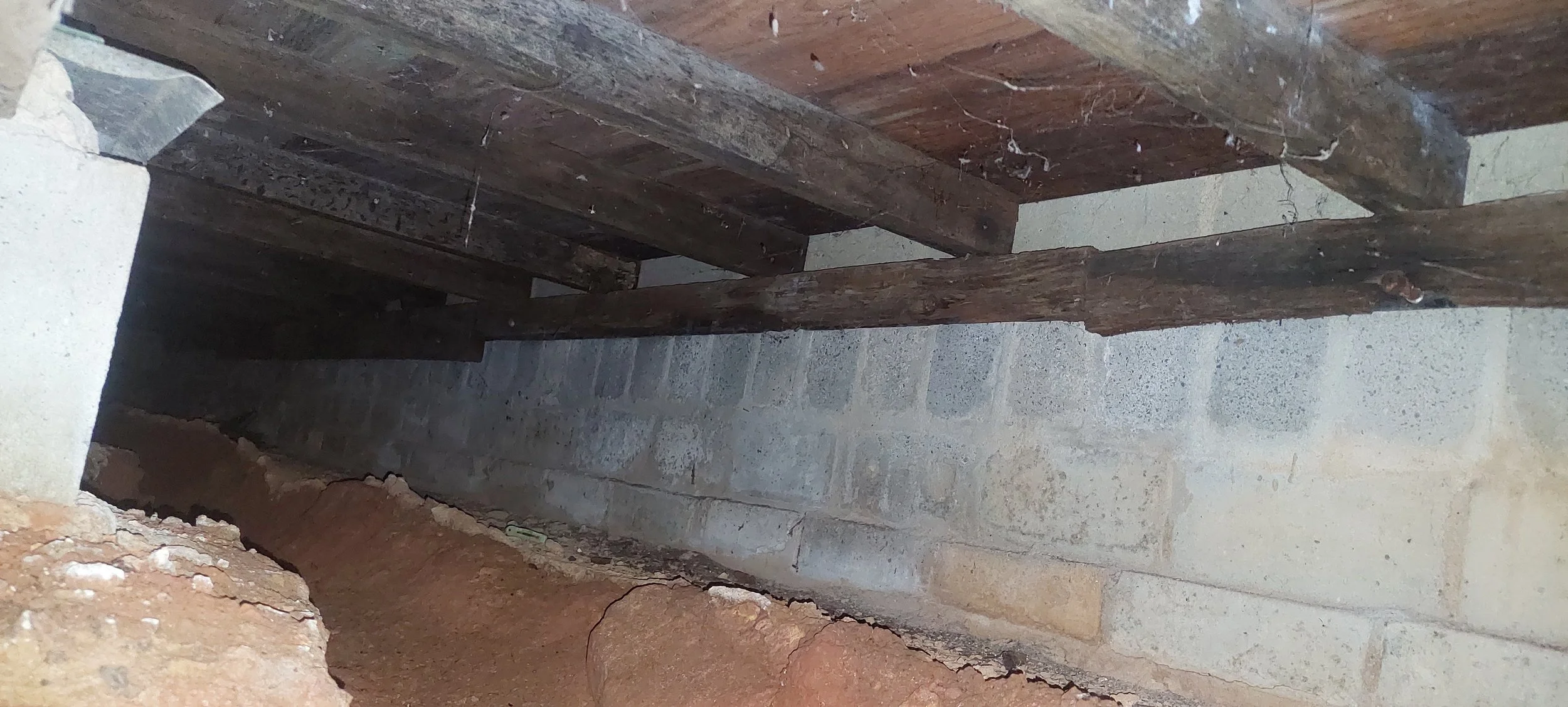
Sub-floor Timber Environment
Subfloor Environment Showing Elevated Moisture Exposure
The subfloor environment shows signs of long-term moisture exposure affecting structural timber elements beneath the home.
Restricted airflow, elevated humidity conditions, and prolonged moisture retention can increase the probability of:
timber deterioration
mould growth conditions
reduced drying capacity
elevated internal environmental instability over time
Subfloor environments are rarely measured during standard building inspections, despite directly influencing the performance and durability of the structure above.
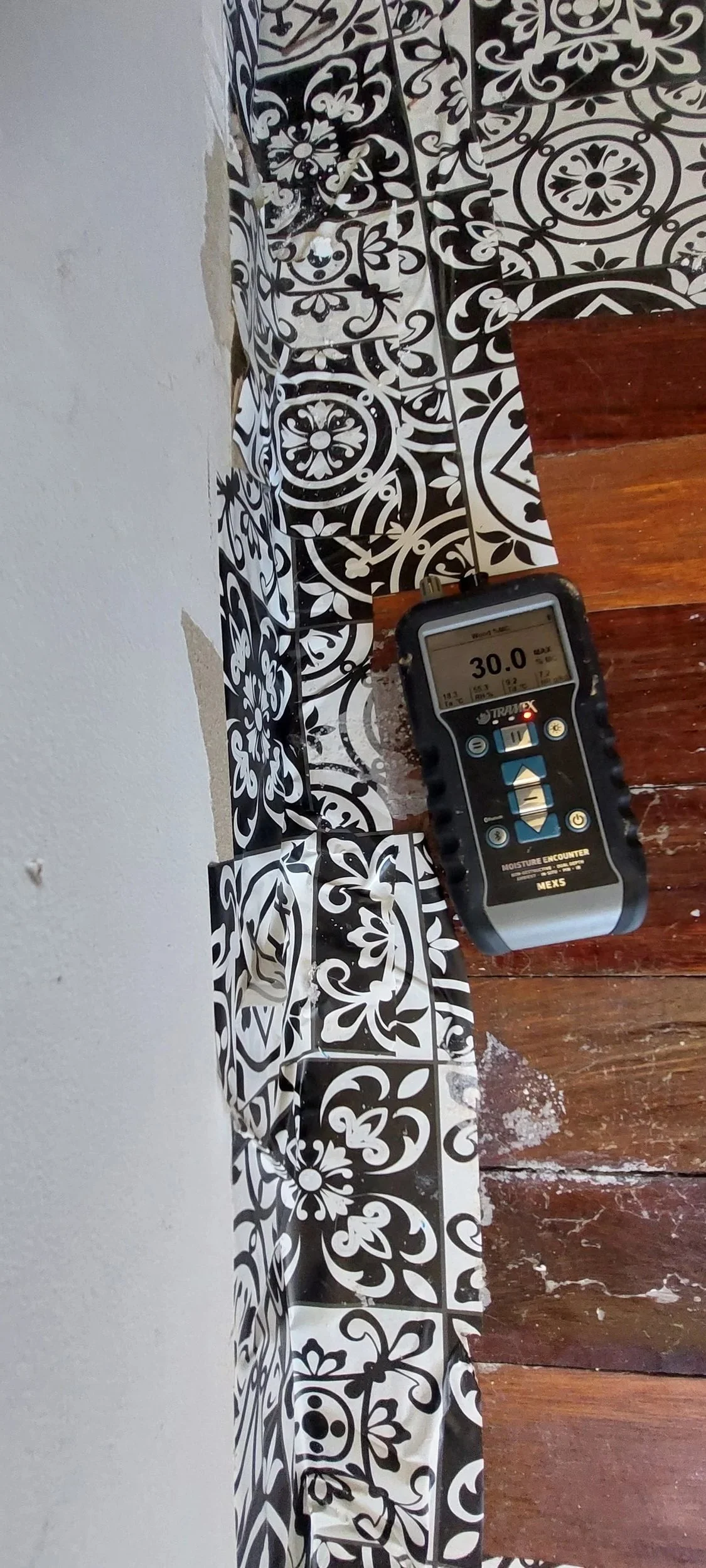
Perimeter Floor Moisture Testing
Elevated Moisture Readings Detected Around Internal Floor Perimeter
Moisture testing around the floor perimeter identified elevated moisture conditions within sections of the timber flooring assembly.
These readings are often a downstream indicator of larger environmental conditions occurring beneath the home, including:
elevated subfloor humidity
restricted ventilation
reduced drying potential
prolonged moisture accumulation over time
Rather than treating visible deterioration alone, the assessment process measures both the symptom and the environmental conditions contributing to it.
This allows the moisture source, airflow behaviour, and long-term building risk to be assessed together as part of the same system.
How We Measure
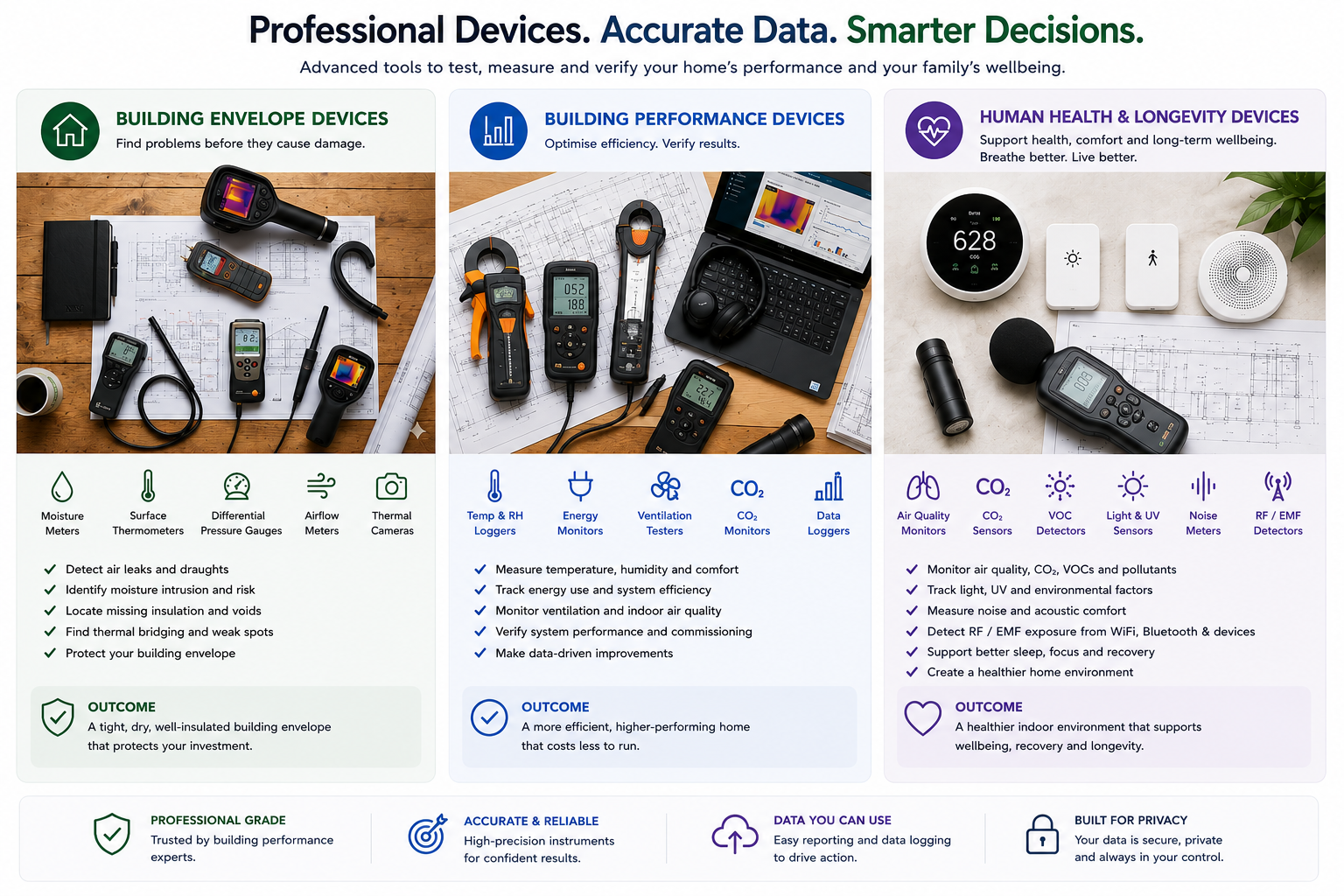
Whats Included
Stage 1
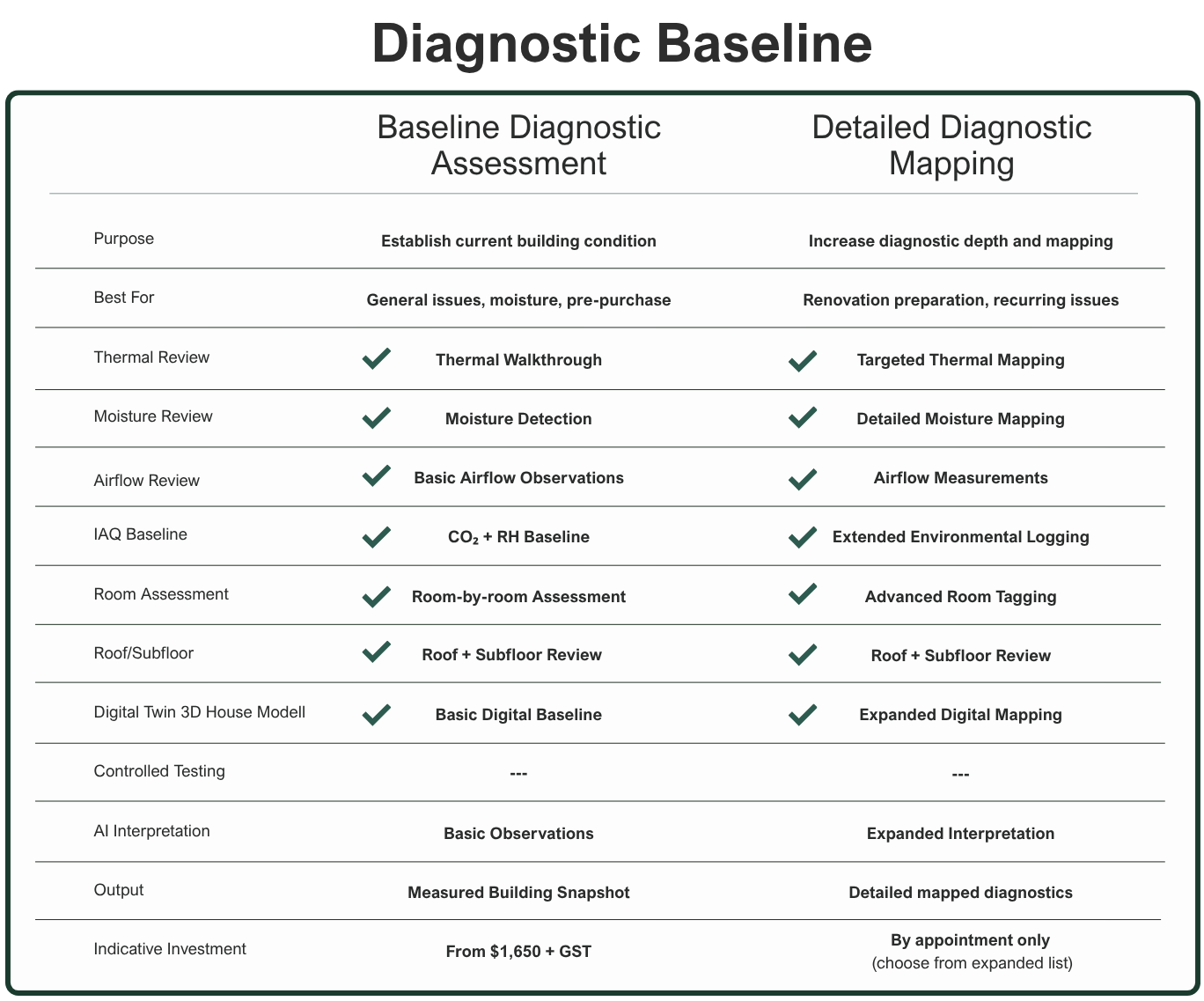
Stage 2
Stage 1 must be completed before stage 2 can proceed.
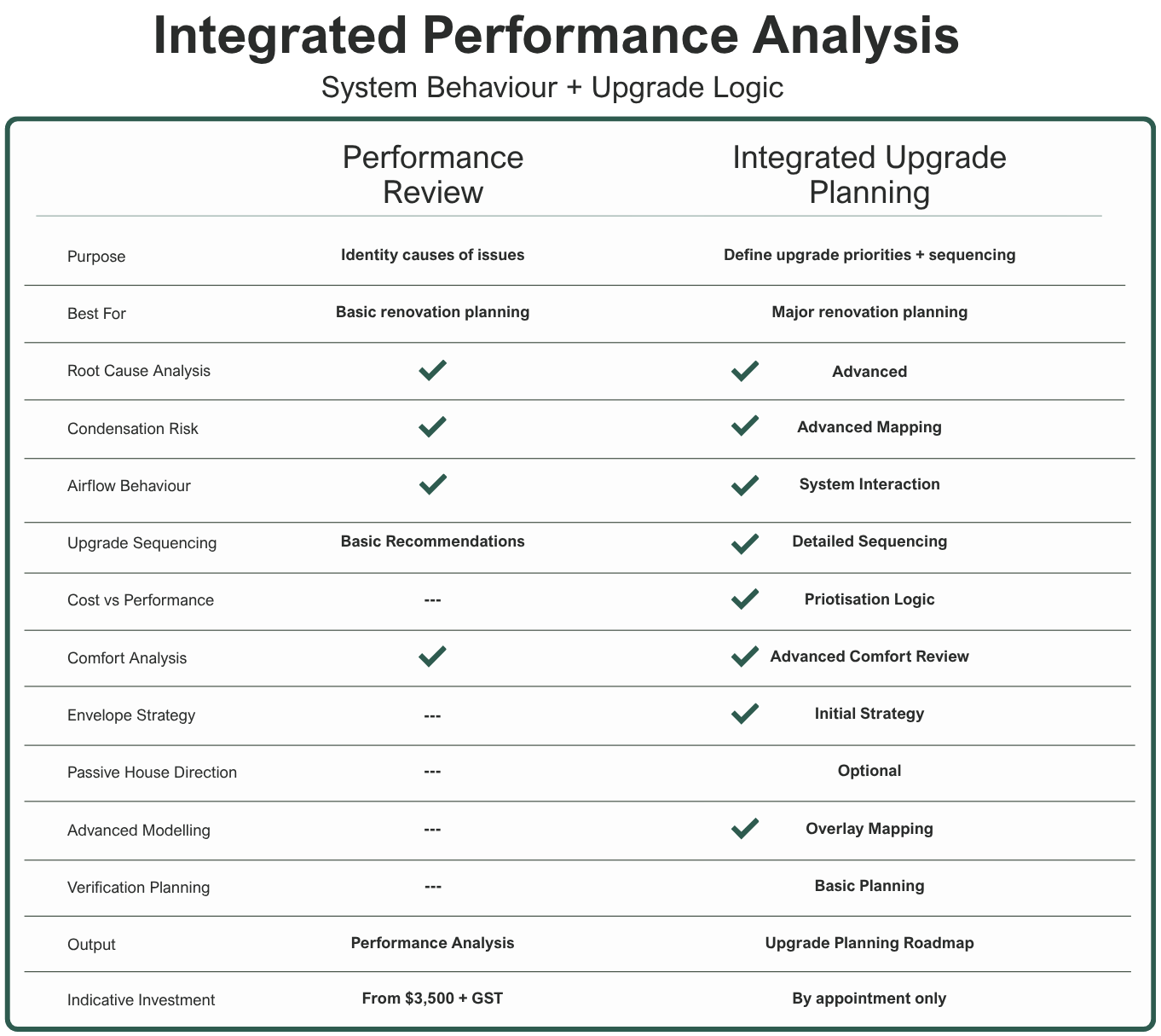
Book stage 1 and stage 2 together and receive a 10% discount.
How is this different from a standard building report?
Our system is designed differently.
Joe Builds Diagnostics follows a structured building intelligence process that moves through three stages:
Measure → Understand → Control
We first establish a measurable baseline of how the home is currently behaving.
From there, the system identifies how different parts of the building interact — moisture, heat movement, airflow, ventilation, and environmental conditions — so decisions are based on real building behaviour rather than assumptions.
As the assessment progresses, the information is organised into a digital building model that allows problems, risk areas, and upgrade pathways to be mapped visually and tracked over time.
You also receive a digital model of your home that can continue to be used long after the assessment is complete.
This can become a long-term reference point for:
future renovations
upgrade planning
tracking issues over time
comparing pre and post construction performance
documenting building information in one place
This creates a controlled decision-making process before renovation, design, or construction work begins.
Instead of simply producing observations, the system is designed to:
identify risk before work begins
reduce incorrect upgrade sequencing
prevent hidden performance failures
guide renovation and construction decisions using measured data
verify what actually improves after work is complete
The result is not just a report.
It becomes a measurable building performance baseline and digital building record that can continue evolving with the home over time.
The cost of incorrect renovation decisions is usually far greater than the cost of identifying risk early.

Home Diagnostic Assessment
Scan → Measure → Improve → Verify
Book your building diagnostics assessment today.
Starting from $1,650 + GST
Limited bookings available each week
Smaller issue or isolated moisture concern?
Single-room diagnostics available on request.