
Build Prices & Project Costs
Pricing is one of the first questions people have — and understandably so.
Construction costs are shaped by far more than square metres or finishes. Site conditions, existing structures, planning constraints, performance targets, and sequencing decisions all influence cost — often significantly.
Publishing generic build prices early creates false expectations and leads to poor decisions later. Instead, pricing is developed in stages, as information becomes clear.
Why We Don’t Publish Standard Build Prices
Every project begins in a different place.
An existing home may carry structural unknowns.
A site may present compliance constraints.
A design may require performance outcomes beyond minimum code.
Two homes of similar size can vary dramatically in cost depending on:
Existing conditions
Structural complexity
Access and staging
Material and performance expectations
Level of documentation before pricing
Rather than offering rough numbers that don’t reflect reality, we focus on a well-defined scope— so pricing can be meaningful.

Our Structured Project Pathway
Each project passes through a staged validation process to confirm planning viability, budget alignment and site buildability before formal engagement.
Start an Assessment
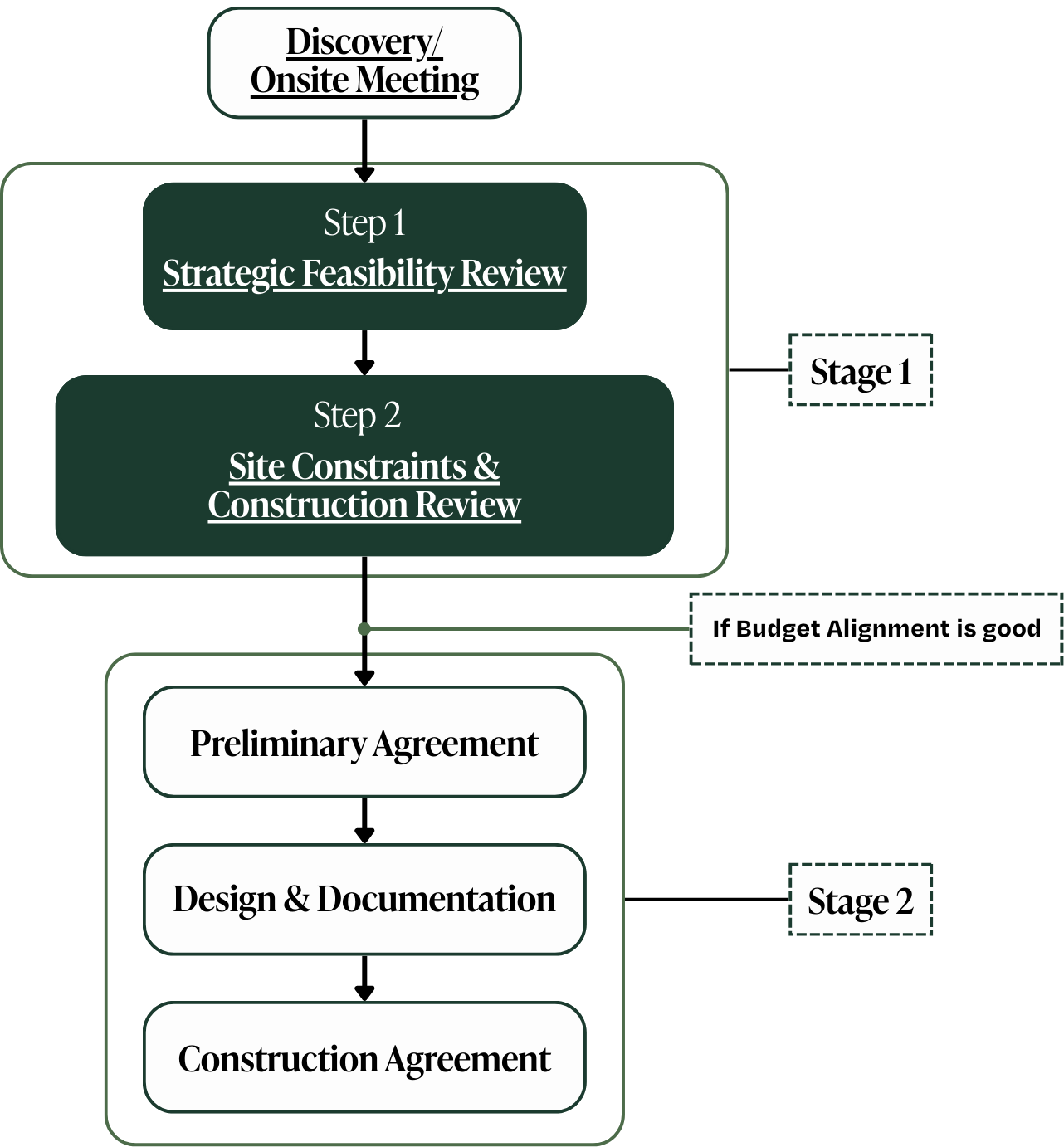
Stage 1 – Validation
Strategic Feasibility Review
We assess zoning, height and setback controls, applicable overlays and likely approval pathway. The brief is tested against a realistic budget range and overall complexity profile to identify early planning and commercial risks.
Site Constraints Review
We evaluate the physical realities of the site — slope, soil risk, stormwater, services, access and construction logistics — to identify site-driven cost factors and structural implications.
Only projects aligned in planning feasibility, site viability and budget expectation proceed forward.
Stage 2 – Delivery
Preliminary Agreement
Formalises scope, design consultant pathway and project structure.
Design & Documentation
Development of approvals-ready and build-ready documentation within validated feasibility parameters.
Construction Agreement
Conversion of the documented scope into a formal building contract.
A detailed PDF outlining scope, sequencing and pricing will be emailed to you.
What This Approach Avoids
This approach is designed to avoid artificially low "starting from" prices, under-allowanced quotes, and the common scenario where design progresses well beyond the realities of budget. It also minimizes reactive variations during construction - the kind that create pressure, disrupt timelines, and inflate costs.
Typical Budget Considerations
While every project is unique, most of the work we undertake sits within established budget ranges. These reflect projects involving meaningful structural or spatial change, performance-focused building practices, and a carefully controlled, well-managed delivery process.
If you're unsure where your project may sit, that's completely normal. Clarity around cost typically begins with a structured conversation that brings scope, priorities, and feasibility into alignment.
Where to Begin
Most projects begin with a building consultation or a feasibility-focused discussion. These early steps lay the groundwork for accurate pricing, informed decisions, and a clear path forward.
If you are unsure where to start, try here.