
Building Consulting
Most construction problems are created before work starts.
Scope is assumed.
Costs are guessed.
Conditions are missed.
We operate as the first decision gate to prevent that.
Every project begins with a measured assessment.
The Review Process
No design. No pricing. No assumptions until this is complete.
01
We measure the building
We use on-site tools to check for moisture, heat loss and hidden problems before anything begins.
02
We define the scope
We outline what needs to be done and the likely cost of the project.
03
We assess the project
We validate feasibility and cost
04
You receive clear direction
You leave with a defined recommendation — proceed, adjust, or pause.
Structured Decision Stages
Every project follows a defined sequence.
Progress only occurs when the previous stage is complete.
Step 1 — Mandatory starting point
Building Diagnostic
On-Site Measured Assessment
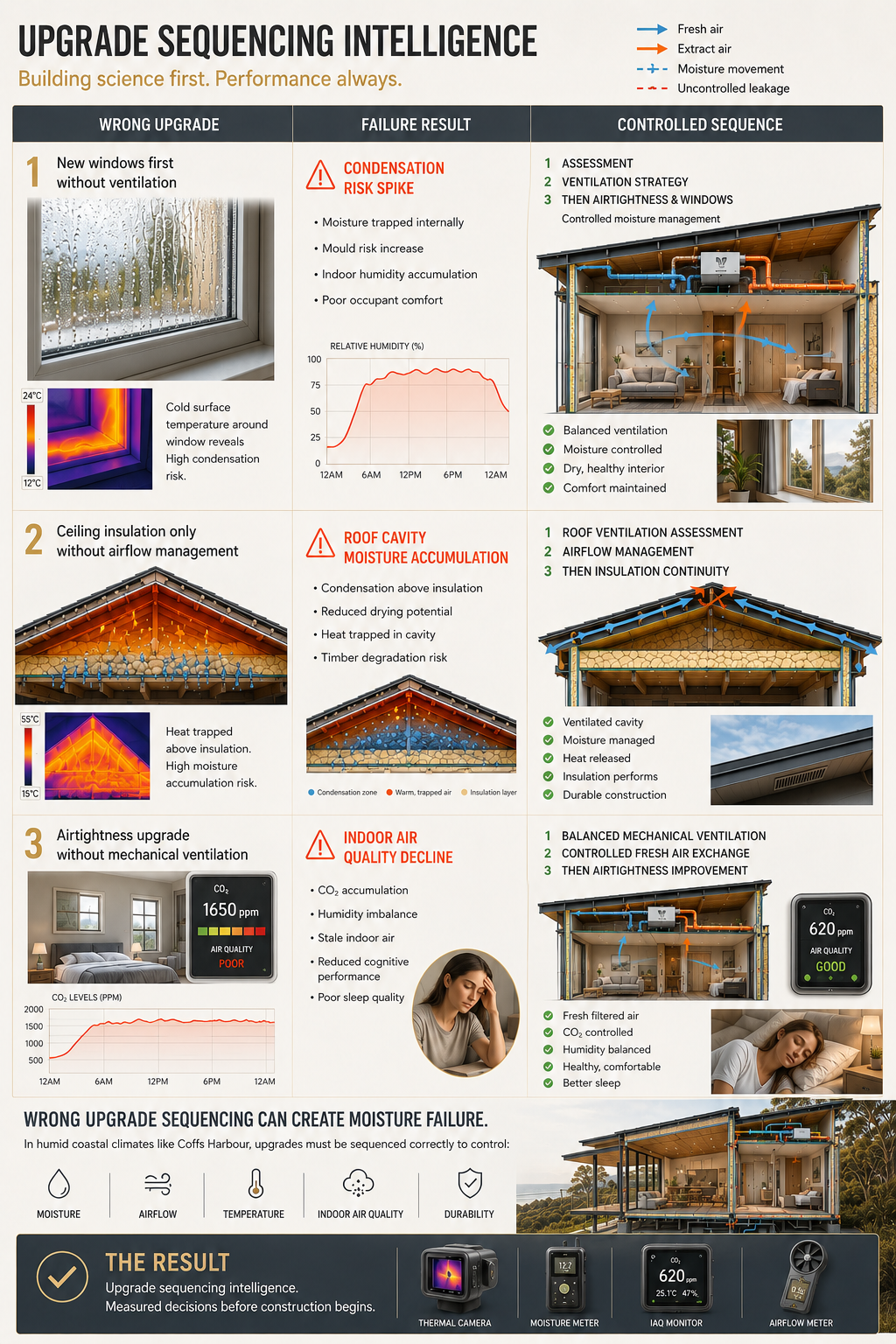
On-site diagnostics identify moisture, thermal performance, air leakage, and risk before any decisions are made.
Pathway 1 — Existing Homes
Pathway 2 — New Homes
Existing Homes & Renovations
Pathway 1
Building Diagnostic for Existing Homes
All renovation and upgrade projects begin with a building diagnostic.
No work proceeds until the existing conditions are measured.
We measure on site:
– Moisture risk
– Thermal performance
– Air quality and ventilation
– System interaction
This identifies what is actually wrong before any work begins — preventing incorrect upgrades and rework.
We also establish baseline performance levels.
This allows any proposed upgrades to be measured, verified, and aligned with a defined outcome — not guesswork.
How The Assessment Works
LEVEL 1 — Measured Performance Diagnostics
On-site measurement of building condition and performance behavior.
LEVEL 2 — Integrated Performance Analysis
Interpretation of moisture, thermal, airflow and ventilation interaction.
LEVEL 3 — Strategic Upgrade Control
Controlled renovation planning before construction begins.
Once the diagnostic is complete, projects move through the following stages as required.
Pathway 2 — Phase 1
Strategic Feasibility Review
Planning, compliance, and budget validation
Applied relative to project scale and risk profile.
Typical projects
• New homes
• Major extensions
• Secondary dwellings
• Architect-led projects
• Complex renovation works
This review occurs before design begins.
Pathway 2 — Phase 2
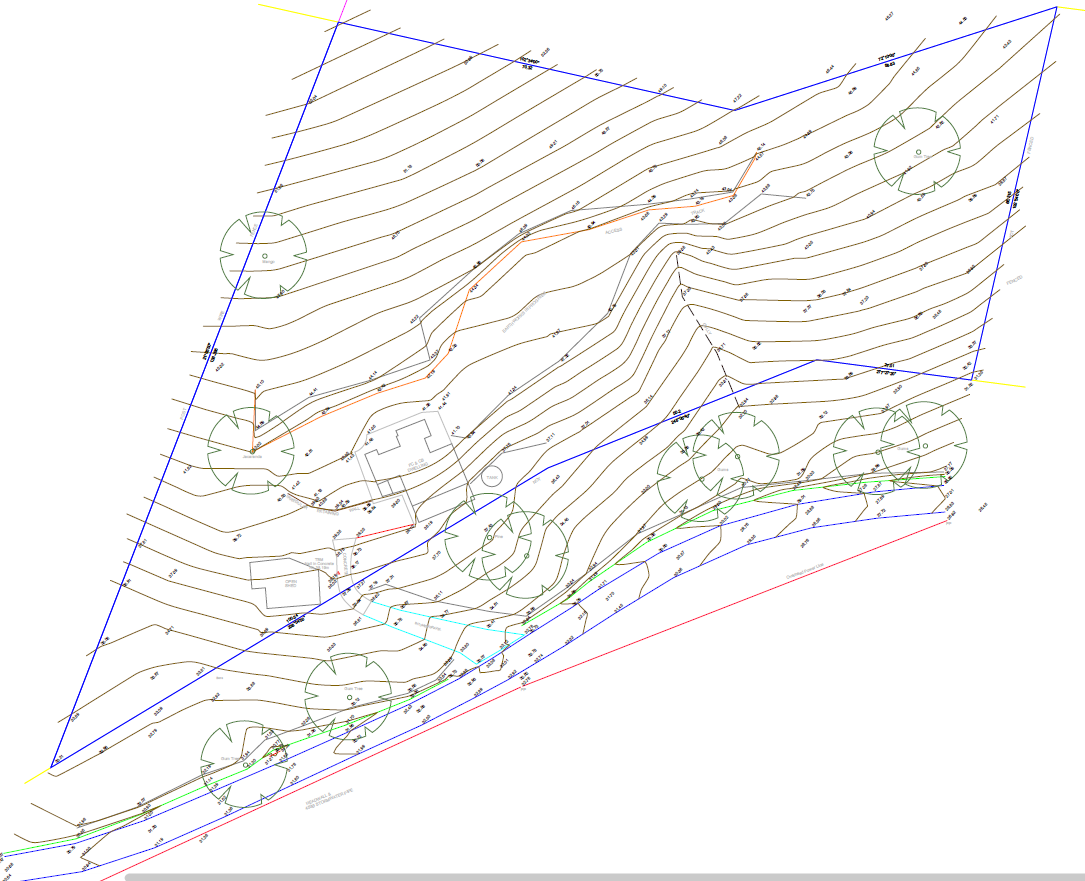
Site Constraints Review
On-site conditions, access, and cost drivers
Once feasibility is confirmed, the next stage verifies site reality.
This on-site technical review examines:
• slope and excavation exposure
• services infrastructure
• access and logistics
• drainage and water management
• physical construction constraints
Outcome
Confirms whether the land can support the project without hidden cost exposure.
Pathway 1 — Phase 3
Pre-Construction Engagement
Scope, documentation, and construction planning
Once feasibility and site conditions are confirmed, the project moves into structured development.
This stage prepares the project for construction by:
• refining scope
• reviewing documentation
• aligning cost direction
• confirming construction methodology
Outcome
A controlled pathway from concept to construction contract.
Other Ways to Begin (If Your Project Is Already Defined)
These options apply only where project scope or conditions are already clearly understood.
Fixed Building Consultation
Used when the project scope is already clear and does not require full diagnostic or feasibility assessment.
This is a structured, on-site session to confirm scope, identify risks, and define what is actually being built before pricing begins.
This replaces the traditional free quote approach.
Common project types:
Kitchen renovations
Bathroom renovations
Internal layout changes
Decks, pergolas, or small external works
What this session does:
Confirms scope of works
Identifies structural and services implications
Flags compliance and access considerations
Aligns the project before pricing begins
Outcome:
A clear, defined scope with construction considerations understood — allowing pricing to proceed without guesswork.
If scope or conditions are unclear, the project returns to the Building Diagnostic stage.
Not Sure Where to Start?
Initial Advisory Call
This is a short call to determine whether your project is suitable and which review pathway applies.
Online Assessment
Answer a short set of structured questions.
We’ll review your responses and provide clear next steps.