

Home Diagnostics
Measured building performance before renovation or upgrade decisions are made.
Understand what your home is actually doing before you renovate.
We believe every homeowner should own a digital twin of their home — a measurable understanding of its current condition, performance, risks, and behaviour before major decisions are made.
Why This Exists
Most renovation problems begin before construction starts.
They begin when decisions are made without understanding how the building is actually performing.
Moisture issues are covered instead of identified.
Air leakage increases after upgrades.
Ventilation becomes unbalanced.
Thermal and condensation risk shifts through the building.
Indoor environmental conditions influence respiratory health, sleep quality, cognitive performance, and long-term biological stress.
Our diagnostic process establishes measured reality before renovation decisions are made.
We identify:
building condition
performance failure
moisture and airflow risk
indoor environmental behaviour
Before design, pricing, or upgrade work begins.
The Digital Baseline Difference
One of the largest differences in our process is the creation of a measurable building baseline.
This becomes a long-term reference point for the home.
The information can later be used to:
• compare pre vs post renovation performance
• verify improvements
• support builders or designers during planning
• reduce renovation uncertainty
• guide future upgrade decisions
• document building performance over time
This allows the home to be measured, improved, and validated — rather than renovated blindly.
4 Step Process
Step 1 — Measure
We establish the current condition of the home.
Step 2 — Understand
We identify why problems are occurring and how the home performs.
Step 3 — Project Control
We define the correct upgrade or construction pathway before money is spent.
Step 4 —Verify
Re-test the home with verified measurements.
What Is Happening In This Thermal Image?
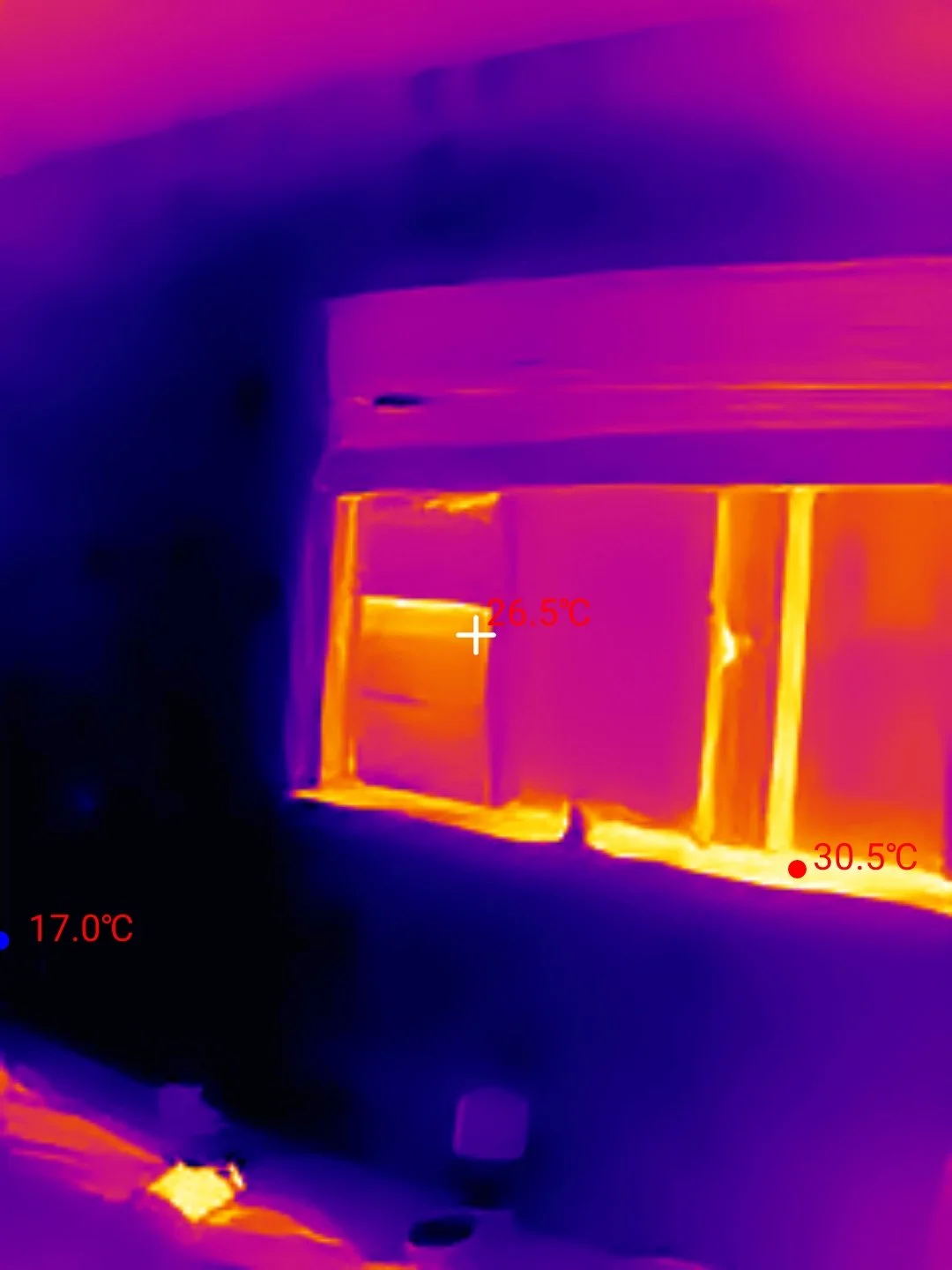
This thermal image shows a major surface temperature imbalance within the same room.
The lower section of the window is reaching approximately 30.5°C, while the nearby insulated wall surface remains around 17°C. This creates a temperature differential of roughly 13°C across adjacent building elements.
The glazing and frame area are absorbing and transferring solar heat into the room significantly faster than the surrounding insulated wall system.
Why This Matters
Even if the indoor air temperature appears “comfortable,” large surface temperature differences can create:
Radiant discomfort near windows
Localised overheating
Increased cooling demand
Uneven room temperatures
Reduced thermal stability
Higher energy consumption
This is one of the key differences between standard construction and high-performance Passive House design.
Passive House principles aim to reduce these thermal variations by improving:
glazing performance
frame performance
shading design
airtightness
insulation continuity
thermal bridge control
The goal is not simply a lower energy bill.
The goal is a more stable internal environment where surfaces throughout the home remain much closer in temperature and therefore feel more comfortable to occupants.
“Damp, mould, or rooms that never feel right?”
Find out what’s actually happening before you spend money fixing it.
View assessment pricing, scope, and inclusions.
Home Diagnostic Assessment
Starting from $1,650 + GST
Limited bookings available each week
Smaller issue or isolated moisture concern?
Single-room diagnostics available on request.