Why does a Coffs Coast home feel damp or musty?
A room can feel damp or smell musty for many reasons, and the experience may change from one day to the next. That does not make it imaginary. It means the first job is to record the pattern without jumping from the symptom to a concealed cause.
The useful questions are simple: Where does it happen? When is it strongest? What was the weather doing? How was the room being used? Does the same pattern appear elsewhere in the home?
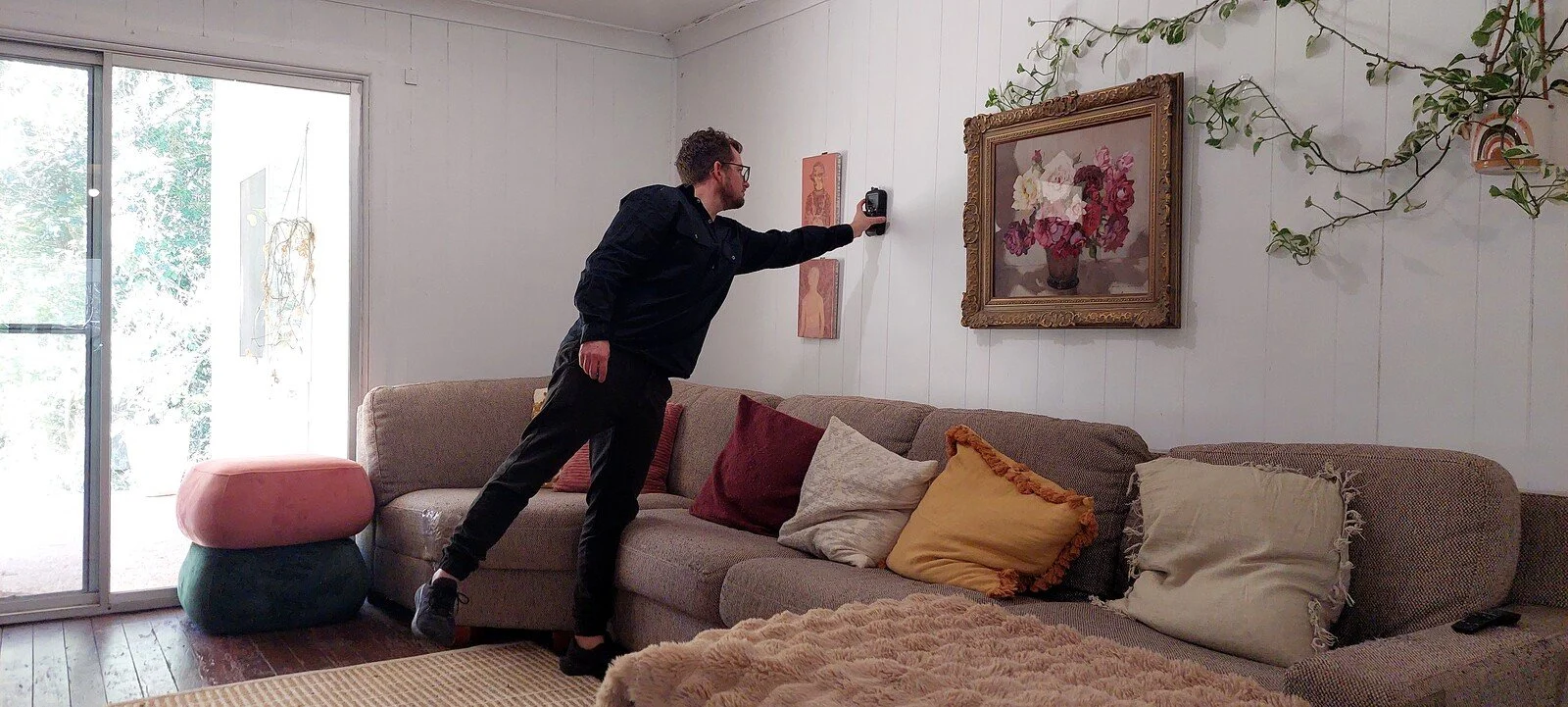
Start by mapping where it occurs
One room, one wall or one corner is a different assessment question from several rooms across the house. Note whether the concern is near windows, wardrobes, external walls, floor edges, a bathroom, the subfloor or another repeatable location.
Mapped locations let the assessment remain specific. They also make it possible to return to the same places later rather than relying on memory.
Record the room conditions
Temperature and relative humidity help describe the room at the time of the visit. Carbon dioxide can add occupied-room context. Recent showering, cooking, heating, cooling, open windows, closed doors and the number of people in the room can all matter.
One value is not the whole answer. The time, location and room use need to stay attached to it.
Connect moisture readings and thermal patterns carefully
Selected moisture-indicator readings can show how accessible locations compare when the material and instrument mode are recorded. Thermal imagery can show surface-temperature patterns when the conditions support useful interpretation.
Neither should be treated as a concealed-cause detector. The evidence becomes more useful when readings, images, weather, visible observations and building context are considered together. How Joe measures explains the method behind each reading.
Decide whether the question is local or whole-home
If one room is clearly different, an Environmental Room Scan can create a focused record. If the same concern appears in several rooms, or if you are deciding on broader repairs or upgrades, a Home Performance Baseline can connect the pattern across the agreed accessible areas.
The Baseline is also the better route when several people have offered separate explanations and you want one mapped record before choosing which pathway to follow.
Do not let the first product become the investigation
A dehumidifier, fan, heater, coating or cleaning product may change what you notice, but purchasing it first can make it harder to understand the original conditions. Where practical, record the current state before changing several variables at once.
The assessment does not replace another professional’s design or trade advice. It helps make the next question more precise.
What Joe Builds does not claim
Joe Builds does not identify biological material, determine health risk, open building materials, inspect every concealed area or establish a cause from smell alone. The report separates recorded conditions, builder-led interpretation, limitations and the recommended next pathway.
The practical starting point
For one room, the current standard Environmental Room Scan is $825 inc GST. For a wider home pattern, the Home Performance Baseline starts from $1,815 inc GST.
Turn the recurring symptom into a mapped question.
Tell Joe where the pattern appears and what decision you are trying to make.